
The Thesis
The Double Digital Speed turns social mobility into an asset.
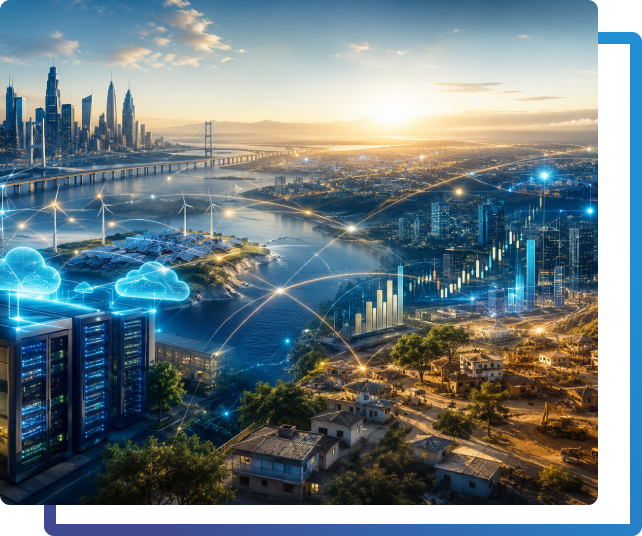
The world no longer moves at a single pace. Digital infrastructure, the cloud and artificial intelligence deploy around robust power grids, tax incentives and stable cities, accelerating those already ahead. Everyone else receives the technological wave without the mechanisms to capture its value. We call this the Double Digital Speed.
The opportunity is clear: over the coming decade, the difference between a market that captures value and one that cedes it will not depend on whether it receives investment — it will — but on the quality of the intermediary negotiating between global capital and the local ecosystem That role is vacant. That role is BTZ.
Where the gap between potential and reality is widest, so is the risk-adjusted return with impact that can be structured.
From obstacle to advantage
Traditional capital avoids underserved markets because it reads their features as risks. BTZ structures them as advantages. Absent infrastructure becomes a long-term contracted asset; perceived risk becomes a superior return protected by catalytic capital; informality becomes new formal flows and monetizable data. Every apparent disadvantage is the source of a hard-to-replicate edge.